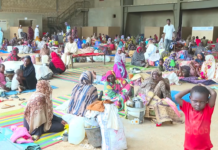
Medical Care: In El Obeid, families arriving at one of the country’s largest displacement camps face another struggle: getting medical attention. Healthcare services are stretched to breaking point. There is a sense of fear among people in El-Obeid. Drone strikes are not limited to military targets. They very often hit civilian areas, killing and injuring civilians.
EL OBEID SEPTEMBER 3: Four years into Sudan’s war, displacement continues to reshape the lives of millions. In El Obeid, families arriving at one of the country’s largest displacement camps face another struggle: getting medical attention when they need it. For people already forced from their homes by the conflict, access to healthcare has become an additional challenge as they try to rebuild their lives.
There is a sense of fear among people in El-Obeid. Drone strikes are not limited to military targets. They very often hit civilian areas, killing and injuring civilians. Since June, strikes hit schools, a market, fuel stations and supplies, water points and the main power station of El-Obeid. This has caused major disruption to the city’s electricity supply leading to blackouts, although the network has been re-established. The water situation is critical, with many people waiting for hours to collect water. El-Obeid now depends mainly on seasonal dams and a small number of urban boreholes.
Healthcare services are stretched to breaking point, and families have been fleeing to camps in the west, struggling to survive without reliable access to food, clean water or medical care.
The collapse of food supply systems has left millions facing acute food insecurity. Nearly five million children and pregnant or breastfeeding women are estimated to be suffering from malnutrition. Additionally, women and girls continue to face an extreme risk of sexual violence, exploitation and abuse throughout the conflict, particularly within overcrowded displacement camps where protection services are limited.
Women are unable to give birth safely. Survivors of sexual violence are often left without emergency medical treatment, psychological support or protection services. Without functioning healthcare systems, vaccination programmes, or adequate sanitation, diarrhoea, malaria and cholera continue to spread through communities already weakened by malnourishment and displacement.
During the rainy season, the threat of cholera outbreaks becomes even greater, placing additional pressure on the few remaining health services.
Across the country, millions of people are losing access to the essential healthcare services that sustain health and everyday life. Children born with entirely treatable conditions are waiting months, sometimes years, for surgery.
Cancer patients see their treatment interrupted mid-course; people with kidney disease can’t reliably get dialysis; pregnant women travel long distances for a functioning maternity ward. The hospitals still operational are stretched thin, overwhelmed by demand, short on medicine and staffed by health workers working under extreme pressure.